
The short answer
Public cost guides quote anywhere from 5 to 20 years because they measure different jobs on different roofs. How long a restoration lasts depends on the condition of the tiles or sheets, the repairs done first, the preparation, the coating system, coastal salt and lichen, and maintenance afterwards. Compare quotes on those factors, not on a number.
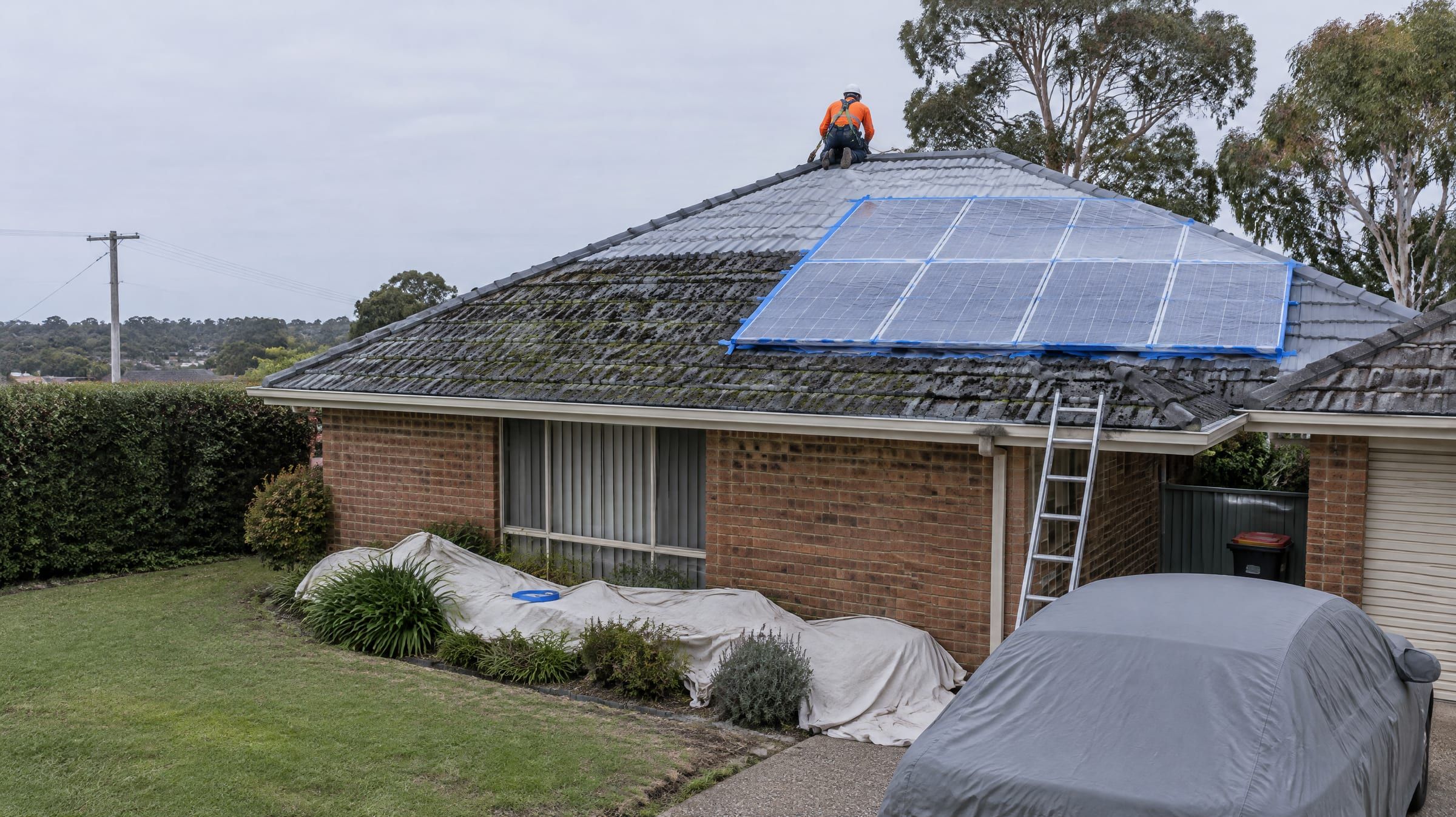
There is no single number for how long a roof restoration lasts. Public cost guides quote anything from 5 to 20 years, and one gives two different figures on the same page, because a restoration is not one product. Its life depends on the condition of the tiles or sheets underneath, the repairs done before coating, the preparation, the coating system, how exposed the roof is and how it is looked after. Those factors show up in a well-written quote, which makes them more useful than any headline figure.
Why published lifespans range from 5 to 20 years
Published figures disagree because they measure different jobs on different roofs. A recoat over a lightly prepared surface, a full restoration with repairs, an inland roof and a beachfront roof all get described with the same word.
| Source | Published figure | What it describes |
|---|---|---|
| What’s The Damage, restoration vs replacement guide, updated November 2026 | Adds 5-10 years in its summary box, 10-15 years in its FAQ | Restoration of a structurally sound roof |
| What’s The Damage, Sydney roof restoration guide, updated November 2026 | About 10-15 years, with coastal homes at the lower end | A quality restoration on a sound roof |
| Canstar, roof restoration cost guide, July 2026 | Approximately 15-20 years | Roof restoration in general |
| The Quote Yard, NSW roof painting cost, published January 2026 | 8-12 years for standard acrylic paints, 15-20 years for membrane systems | Coating type, not the whole restoration |
| What’s The Damage, Sydney roof painting guide, updated November 2026 | 10-15 years for a quality membrane recoat, while single-coat sprays over poor preparation can fail within a few years | Coating and preparation quality |
A few things stand out. One guide gives two different figures for the same job. The higher figures assume a sound roof and a quality system. The coastal caveat appears more than once. Every figure in the table comes from a cost guide or aggregator, not from independent testing.
None of these figures is ours, and none is a promise about your roof. Read them as a range of possibilities. The rest of this guide explains which factors push a roof towards the top or the bottom of that range.
Substrate condition: what the coating is going on
The substrate is the surface under the coating, the tile or the metal sheet. A coating protects a sound substrate. It does not add strength to a failing one.
A concrete tile that is cracked, badly porous or crumbling at the edges gives the coating nothing stable to hold. A metal sheet with rust through it will keep corroding under new paint. Coating over either produces a roof that looks restored and is not.
What’s The Damage’s Sydney roof painting guide makes the same distinction for lichen-stained tile roofs. They are suitable for painting only if they are structurally sound and watertight.
This is why the first question is always whether the roof should be restored at all. If tiles are failing across the roof, the frame is compromised or the roof contains asbestos, the answer is replacement, and no coating system changes that. Our guide to restore, repair or replace sets out the symptoms for each tier.
Repairs before coating
A restoration lasts only as long as the repairs underneath it. Cracked tiles, failed ridge lines, worn valleys and lifted flashings have to be fixed before any coating goes on.
On a tile roof the repair stage usually covers:
- Replacing cracked or broken tiles where suitable replacements are available
- Rebedding, which resets the ridge and hip caps in a new mortar bed, where the old bed has failed
- Repointing, which applies a new flexible seal over the bedding along the ridges and hips
- Checking valleys and flashings, the metal strips that seal the joints and edges of the roof
On a metal roof it covers corroded or loose fixings, rust treatment, and flashings and sealant at penetrations. Where corrosion has gone through the sheet, the sheet needs replacing, not coating.
Coating over a failed ridge or a cracked tile hides the fault for a season. The leak is still there, now under fresh paint. Our guide to rebedding vs repointing explains why ridge work done in the wrong order is wasted.
If something concealed turns up during the repairs, we stop, photograph it and send a written variation. Nothing proceeds without your approval.
Preparation and the dryness check
Preparation decides whether the coating bonds to the roof or to what is living on it. What’s The Damage’s roof painting guide puts it in four words. The prep is the job.
On a tile roof, preparation means cleaning the surface so the primer bonds to the tile, treating moss, lichen and mould, and removing loose and chalky material. Cleaning here is a preparation step inside the restoration, not a separate service. What’s The Damage describes tile roof preparation as a clean, a biocide wash to kill lichen and mould, a sealer or primer and then two to three membrane coats. On a metal roof it lists rust treatment and an etch primer before the recoat.
Then the roof has to be dry. Coating a damp surface traps moisture under the film and weakens the bond. We treat dryness as a hold point, a check that has to be passed before the next stage starts, and we record it. If the roof is not dry, primer does not go on.
Wind gets the same treatment. If overspray cannot be adequately controlled, we do not spray.
Ask any quote how preparation is done and how dryness is confirmed. A line that just says “clean and paint” leaves both questions open.
The coating system, and what heat-reflective options change
A coating system is the full set of products applied to the roof, usually a primer or sealer and one or more topcoats, used together as specified. The system matters more than the colour chart.
The Quote Yard’s NSW roof painting guide separates standard acrylic paints from membrane systems and gives them different life expectancies, as shown in the table above. Whichever type is quoted, the quote should name the actual primer and topcoat, the number of coats, and whether the system suits the roof material and its exposure. A generic label such as “membrane coating” with no product named makes the quote impossible to check.
Heat-reflective coatings. These are designed to reflect more of the sun’s heat so less of it passes into the roof space. The Quote Yard’s guide says they add $5 to $10 per square metre over standard coatings and reduce the heat absorbed through the roof. How much difference that makes inside a home depends on insulation, ventilation, roof colour and orientation.
Indoor temperature claims vary widely between marketing sources, and we have not found an independent primary study we could review, so we do not quote a figure. If heat is your reason for choosing one, ask for the product’s published reflectance data and treat it as a comfort decision rather than a lifespan decision.
Salt, lichen and coastal exposure
Coastal exposure shortens coating life. Salt, moisture and growth all work against a roof surface, and roofs across the Central Coast, Lake Macquarie and Newcastle see plenty of all three.
What’s The Damage’s Sydney roof restoration guide says salt-laden coastal air attacks ridge-cap bedding and metal fixings faster than it does further west, and that coastal homes should expect the lower end of its lifespan range because salt exposure shortens the life of coatings and bedding. The Quote Yard’s roof painting guide notes that coastal-rated coating systems perform better in marine environments and that salt exposure affects product selection.
What that means on the roof:
- Salt. It settles on the surface and is not always washed off by rain, particularly on sheltered sections. On metal roofs, fixings, cut edges and laps tend to corrode first.
- Lichen and moss. Growth holds moisture against the tile, works into porous concrete and undermines the bond of any coating laid over it. Shaded slopes and roofs near bushland or water tend to be most affected.
- Wind. Coastal wind loads ridge lines and drives rain into weak joints, which puts more demand on bedding and pointing.
For a coastal roof, the questions to put to every quote are whether the system is suited to the exposure, how growth will be treated in preparation, and how fixings will be dealt with on a metal roof. We restore roofs across the Central Coast, Lake Macquarie, Newcastle and Sydney, and the roof’s exposure is part of every scope we write.
Maintenance after restoration
A restored roof still needs looking after. Small issues dealt with early stay small.
- Gutters and valleys kept clear, so water runs off the roof rather than sitting on it
- Overhanging branches trimmed back, which reduces debris, shade and growth
- A roof check after a major storm, and after other trades have worked on the roof, such as antenna, air conditioning or solar installers
- Broken tiles, lifted flashings and damaged fixings repaired as they appear, before water gets under the coating
Every restoration we complete closes with a completion report. It records the condition found, the system installed and the photographs, and it sets out the maintenance pathway from there. Keep it with your house records. It is the evidence of what went on your roof.
How to compare two quotes on these factors
Two restoration quotes for the same roof can differ in price because they differ in scope. Put them side by side on the factors that decide how long the result lasts.
| Factor | What a clear quote states | What it looks like when it is missing |
|---|---|---|
| Condition | The tier, with photographs of the roof | A price with no description of the roof |
| Repairs | Each repair by location and quantity | “Repairs as required” |
| Ridge work | Repoint, or rebed and repoint, and how many metres | “Ridge work” with no detail |
| Preparation | Cleaning, growth treatment and how dryness is confirmed | “Clean and paint” |
| Coating system | Primer and topcoat named, and the number of coats | A generic label with no product named |
| Coastal exposure | Whether the system suits the roof’s exposure | No mention |
| Site protection | Masking, solar panels, neighbours and the wind call | No mention of overspray |
| Documentation | A completion report with photographs | Nothing in writing after the job |
If a quote states a lifespan in years, ask what it is based on, what conditions apply and what is excluded. A number with no conditions attached tells you very little.
The quote that answers every row is the one you can hold to account. If a row is blank, ask before you sign.
Get the condition checked
The inspection is free. We inspect the accessible areas of the roof, photograph the condition and tell you whether it is a sound candidate for restoration, what repairs it needs first and what that means for the result. If the roof is past restoring, we say so.
Request a free inspection or call 0468 029 068. See how the work is sequenced on our roof restoration page, or read about roof painting and recoating if the roof is sound and needs a recoat only.
Sources
- Roof Replacement vs Restoration: Which Do You Need and What Does It Cost? - What's The Damage
- Roof Restoration Cost Sydney 2026 - What's The Damage
- Roof Painting Cost Sydney - What's The Damage
- Roof restoration cost - Canstar
- Paint Roof Cost NSW 2026 - The Quote Yard
Figures quoted from third-party sources are theirs, as published at the time of writing. They are general information, not a quote or a statement about SOAKD Roof & Concrete's work.