
What we do around Lake Macquarie
Lake Macquarie’s housing covers a wide span, from older brick-and-tile homes close to the water to newer estates on the edges of its towns. The roofs and slabs differ, and so does the work they need. The table below is a starting point. The inspection confirms which pathway fits, and if it is a different one, we say so.
| What you are seeing | Where it usually leads |
|---|---|
| Slipped or broken tiles, or a damp patch after rain | Roof repairs |
| Growth and worn coating across the roof, cracked ridge pointing | Roof restoration or roof painting |
| Tiles failing across the roof, sagging, or suspected asbestos | Roof replacement |
| Storm damage with water coming in | Emergency roof repairs |
| A stained, worn or patchy driveway on a sound slab | Concrete resurfacing |
| Cracks, spalls or a sealer that has gone white | Concrete restoration and sealing |
| A sunken or broken slab, or a new driveway or path | Concrete driveways and paths |
How does living by the lake affect a roof?
Lakeside roofs stay damp for longer. Morning moisture off the water, sheltered bays and established trees all slow the rate a roof dries out, and slopes facing south, which get the least sun, stay wet the longest.
That moisture feeds moss and lichen. Growth holds water against the tile surface, roughens it and collects in valleys, the channels where two roof slopes meet and carry water down to the gutter. A valley choked with growth and leaf litter can overflow in heavy rain and send water where it should not go.
It also changes the working day. Growth is removed as preparation for restoration or painting, never as a job on its own, and the roof must be dry before primer goes on. On a lakeside roof, that dryness check often decides when coating starts. We record it either way.
Older brick-and-tile homes and newer estates
The two ends of the housing stock raise different questions.
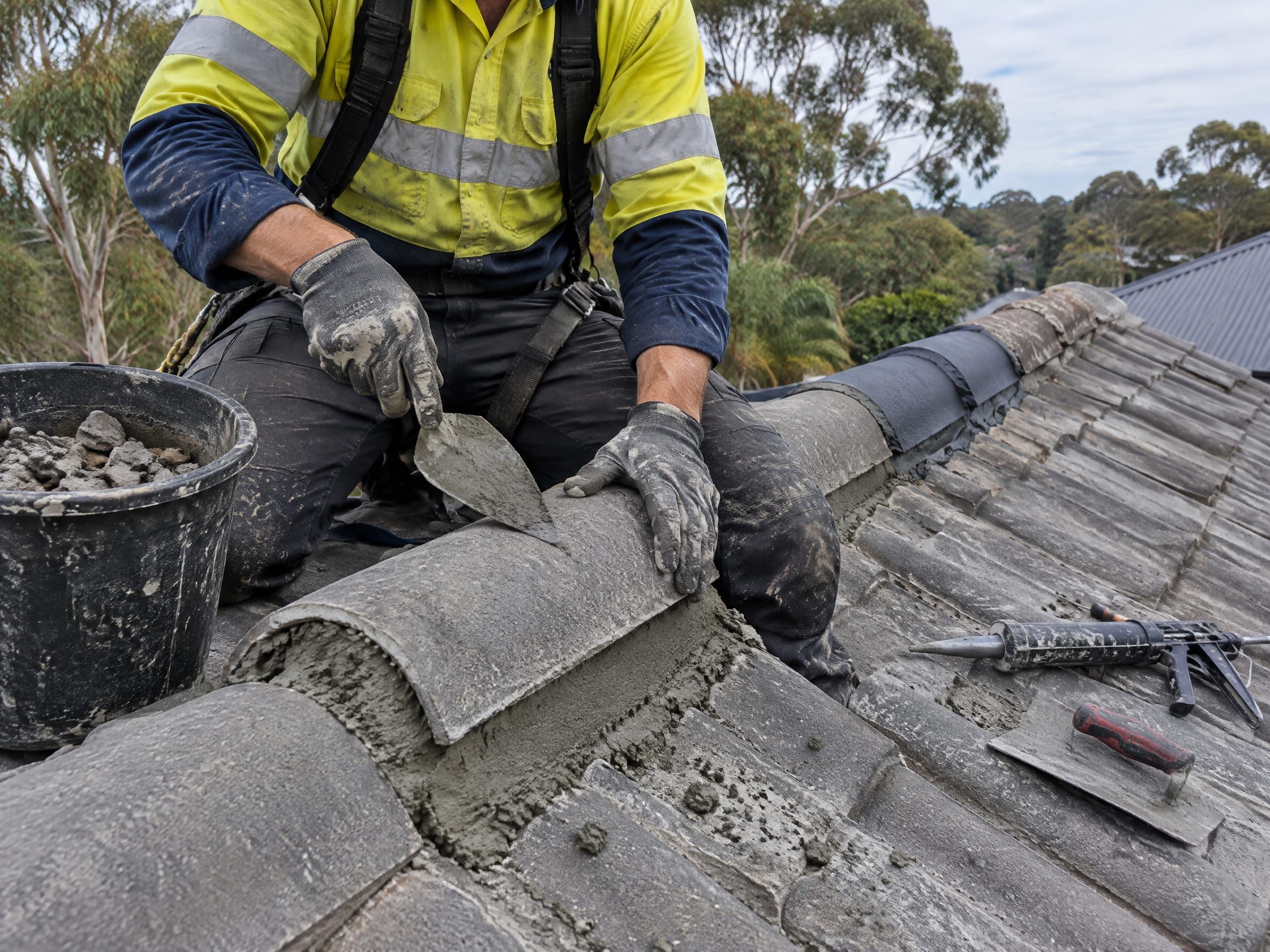
Older brick-and-tile homes often still carry their original ridge work. Bedding is the mortar bed that holds the ridge and hip caps in place, and pointing is the flexible seal laid over it. When the bedding has cracked, repointing over it seals a cap that is no longer held. Our guide on rebedding versus repointing explains the difference. Some older homes also contain asbestos in roof sheeting or eaves. If it is found or suspected, work stops and it is managed through a licensed asbestos professional before anything continues.
Newer estates tend to have newer roofs that need less, and driveways that need more. Coloured concrete fades in full sun, exposed aggregate sealers wear through in the wheel tracks, and slabs laid over filled ground can crack where that ground settles. Those are restoration or resurfacing questions, and the answer depends on what the cracks show.
Ground conditions and new concrete
Before we design a new driveway or slab around the lake, we look at the ground it will sit on. Soil type, drainage and slope all shape the base and the reinforcement. Parts of Lake Macquarie also sit within declared mine subsidence districts, so we check whether the property is in one and whether that affects the design or the approvals. The quote records what we found and what it means for the job.
How the inspection works
It starts with what you are seeing and roughly when it started. From there we arrange a visit, inspect the accessible areas of the roof and any concrete you want assessed, and photograph each finding. The report numbers the findings against the photographs, so you can see the evidence for every line of the scope.
For strata and property managers looking after villas and townhouse complexes around the lake, the same report is written so it can drop straight into a committee minute or an insurer file.
To arrange a visit on either side of the lake, request a free inspection.