
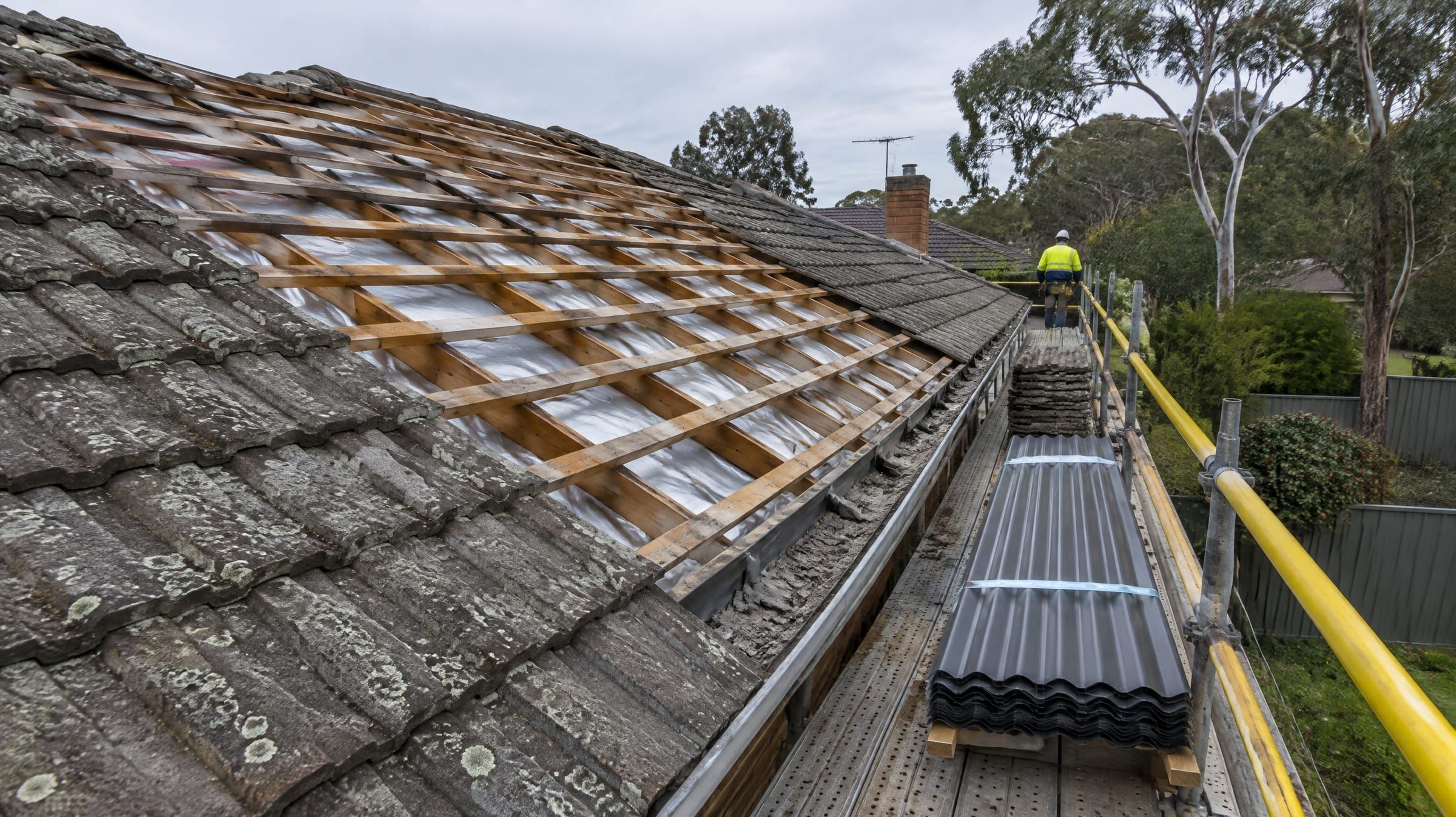
What public asset managers are accountable for
Council and agency asset managers answer for public money, public safety and the audit trail. A roof or concrete job has to be procured fairly, delivered safely around the public and recorded so the next person can see what was done and why.
What goes wrong is rarely the trade work alone. A submission that cannot be evaluated against the others because it does not describe the same work. Variations that turn a fixed price into an open one. WHS paperwork that is generic rather than written for the site. A community hall roof recoated over failed pointing, the seal over the ridge caps, that leaks again the following winter. A finished job with nothing in the file.
We work to the SOAKD Pathway. Diagnose, decide, deliver, defend, document. We take on government and institutional work where the capability requirements are met. Where a procurement asks for something we cannot evidence, we say so before we submit a price.
Scopes written for procurement
A scope you can evaluate states the same things in the same order every time.
| Section | What it covers |
|---|---|
| Condition | What was found, photographed and labelled by location |
| Pathway | Repair, restore or replace, and the reason |
| Inclusions | The work, by location, and by quantity where it can be measured |
| Exclusions | What is not included, stated rather than implied |
| Assumptions | What has been assumed about concealed areas, access and the structure |
| Named system | The roofing, coating, sealer or concrete system by name |
| Hold points | The stages where work stops until a check is passed and recorded |
| Variations | How concealed conditions are raised, priced and approved |
Our hold points are a dryness check before coating, a structure check after strip-off, a pre-pour check, a cure and moisture check before a slab is coated, an overspray check, and a weather and wind go or no-go. If a concealed condition appears, we stop, photograph it and send a written variation. Nothing proceeds without approval.
Where the procurement supplies its own scope or specification, we price to it and flag anything the condition suggests it has missed.
Documentation packs
The documentation is part of the deliverable. We provide what the procurement asks for, and a pack usually covers:
- The inspection report with photographs, building by building
- The scope and the named system
- SWMS, the safe work method statements written for the site’s high-risk work, including work at heights
- Site induction records and the client’s own contractor requirements
- Hold-point records
- Variations, each with the reason, the work and the approval
- The completion report, with the condition found, the pathway, the system installed, before, during and after photographs, the QA sign-off and the maintenance pathway
WHS on public sites
Public buildings stay public while the work happens. Libraries, community halls, depots, amenities blocks and offices often stay open, so the work area is separated from the public with exclusion zones, signage and controlled access, agreed with the site contact before work starts.
Working-at-heights controls are set for each roof, including edges and fragile areas such as skylights and aged sheeting. Licensed trades handle electrical, solar, structural and asbestos work. Older public buildings often contain asbestos cement sheeting. We ask for the site’s asbestos register, and we do not remove asbestos ourselves. It is assessed and managed through an appropriately licensed asbestos professional.
If overspray cannot be adequately controlled, we do not spray. On a public site that includes parked cars, playgrounds, footpaths and neighbouring property.
Staged programs across a portfolio
Councils and agencies rarely deal with one building. A portfolio of halls, amenities blocks, depots and community buildings is easier to manage as a program. We inspect the accessible areas of each roof and the concrete around it, photograph the condition and rank the findings by what needs attention now, what suits restoration and what is heading for replacement.
The program is then delivered in stages, each with its own scope, hold points and completion record, so it can be funded across financial years and reported as each stage closes. Our guide on whether a roof should be repaired, restored or replaced sets out the condition signs behind each ranking.
Paths, forecourts and car parks around public buildings are diagnosed the same way. Sound slabs can be repaired and sealed through concrete restoration. Failed slabs are broken out and replaced, with a recorded pre-pour check before any concrete arrives.
Emergency make-safe after storms
After a storm, a council or agency may have several damaged roofs at once. Safety comes first. Where a roof can be accessed safely, we carry out a make-safe, the temporary work that reduces hazards and limits water getting in. Each building gets its own report, with the damage found, photographs before and after the temporary work, what the make-safe does not address and the recommended permanent repair.
We tell you honestly when we can attend, based on the weather, safe access and the other storm calls at the time. The permanent works are then quoted as scopes that can go through your procurement process. Our page on emergency roof repairs and make-safe explains how a storm call runs.
What to ask any contractor before you award
These questions test whether a submission can be evaluated and delivered as written.
- Does the submission describe the same work as the others, item by item?
- What condition was found, and where are the photographs?
- What is excluded, and what has been assumed?
- Which system is proposed, by name?
- Where are the hold points, and how is each one recorded?
- How are variations raised, priced and approved?
- Are the SWMS written for this site and this roof?
- How will the public be separated from the work?
- What is in the completion documentation, and in what format?
- What evidence can you provide against our capability requirements, including licences and insurances?
Talk to us before the procurement goes out
We work across the Central Coast, Lake Macquarie, Newcastle and Sydney. The inspection is free, and an inspection before a procurement is issued helps the specification match the condition. Request an inspection or call 0468 029 068.