
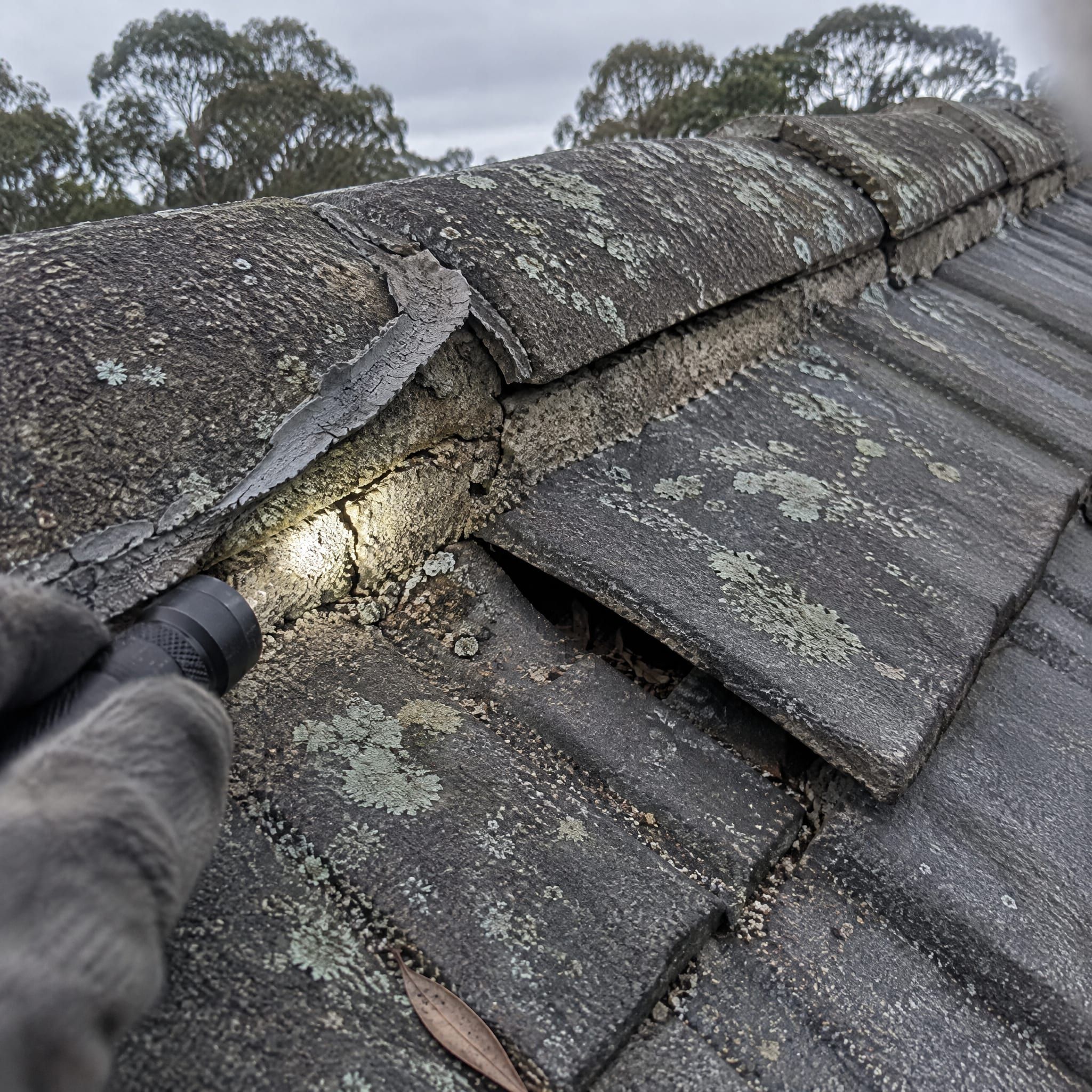
Roofing and concrete work on the Central Coast
The Central Coast is home ground. We are based in Gosford. The roofs here are typically concrete tile or salt-exposed metal, and the slabs underfoot often sit on sandy ground under strong coastal sun.
Whether you need Central Coast roofing repairs, roof painting or a new driveway, the work starts in the same place. We look at the condition first.
On the roof:
- Roof repairs, including tile roof repairs and the rebedding and repointing of ridge caps
- Central Coast roof restorations, with the repairs done before any coating goes on
- Roof painting and recoating for roofs whose coating has worn but whose tiles or sheets are sound
- Roof replacement when restoration is the wrong call
- Emergency roof repairs after storm damage
On the ground:
- Driveway and concrete resurfacing for sound slabs with worn or stained surfaces
- Concrete restoration and sealing, including crack repair and resealing exposed aggregate
- New driveways, paths and slabs, designed, poured and coated by one team
What does coastal weather do to a Central Coast roof?
Salt, moisture and wind each work on a roof differently, and most roofs here get all three.
- Salt air settles on roofs near the ocean. It speeds up corrosion on metal fixings, flashings and sheet edges. Flashings are the folded metal strips that seal the joins around walls, chimneys and valleys.
- Lichen and moss grow readily on concrete tiles in the Coast’s mild, damp conditions. They hold moisture against the tile, roughen its surface and fill the gaps where water should run off.
- East-coast lows bring heavy, wind-driven rain. Water is pushed sideways under tiles and through cracked pointing, the flexible seal over the mortar that holds the ridge caps in place. That is why a leak can appear after a storm on a roof that coped with ordinary rain for years.
Much of the housing across the Coast went up between the 1970s and the 1990s, and a large share of it carries concrete tile roofs. Many of those roofs now have cracked original bedding, the mortar bed under the ridge caps, and a coating that has worn through to bare tile. Whether that means a repair, a restoration or a replacement depends on the condition, not the age. Our guide to reading your roof’s condition before you get a quote covers the decision.
What about driveways and slabs near the coast?
Concrete here has its own conditions to deal with. Sandy soils near the coast can settle or wash out from under slab edges, which shows as cracking or a dropped corner. Shaded paths and driveways stay damp and grow moss and algae that make them slippery. Sun and salt wear sealers down over time.
A cracked driveway is not always a candidate for driveway resurfacing. If the ground under it has moved, a new surface cracks along the same lines. Concrete resurfacing on the Central Coast starts with reading the cracks, and our guide on whether a cracked driveway can be resurfaced explains how we do it.
How does an inspection work?
We come to the property, inspect the accessible areas of the roof and any concrete you want looked at, and photograph what we find. On the roof that means tiles, ridge and hip lines, valleys, flashings and penetrations. On the ground it means cracks, joints, drainage, contamination and any existing coating.
You then receive a written scope, not a number on a card. It states the condition, the pathway it supports, what is included and excluded, and the system by name. Daniel, founder of SOAKD and director, leads roof diagnosis and quoting. If the roof and the driveway both need work, both sit in one scope with one team accountable for them.
Storm damage on the Coast
After an east-coast low, the first job is making the roof safe. A make-safe is the temporary work that limits further water entry and reduces hazards until the permanent repair can be done. We photograph the damage for your insurer and give you a written pathway to the permanent fix through our emergency roof repairs service.
Whether it is a few slipped tiles in Gosford or a stained driveway near the beach, request a free inspection and tell us what you are seeing.