
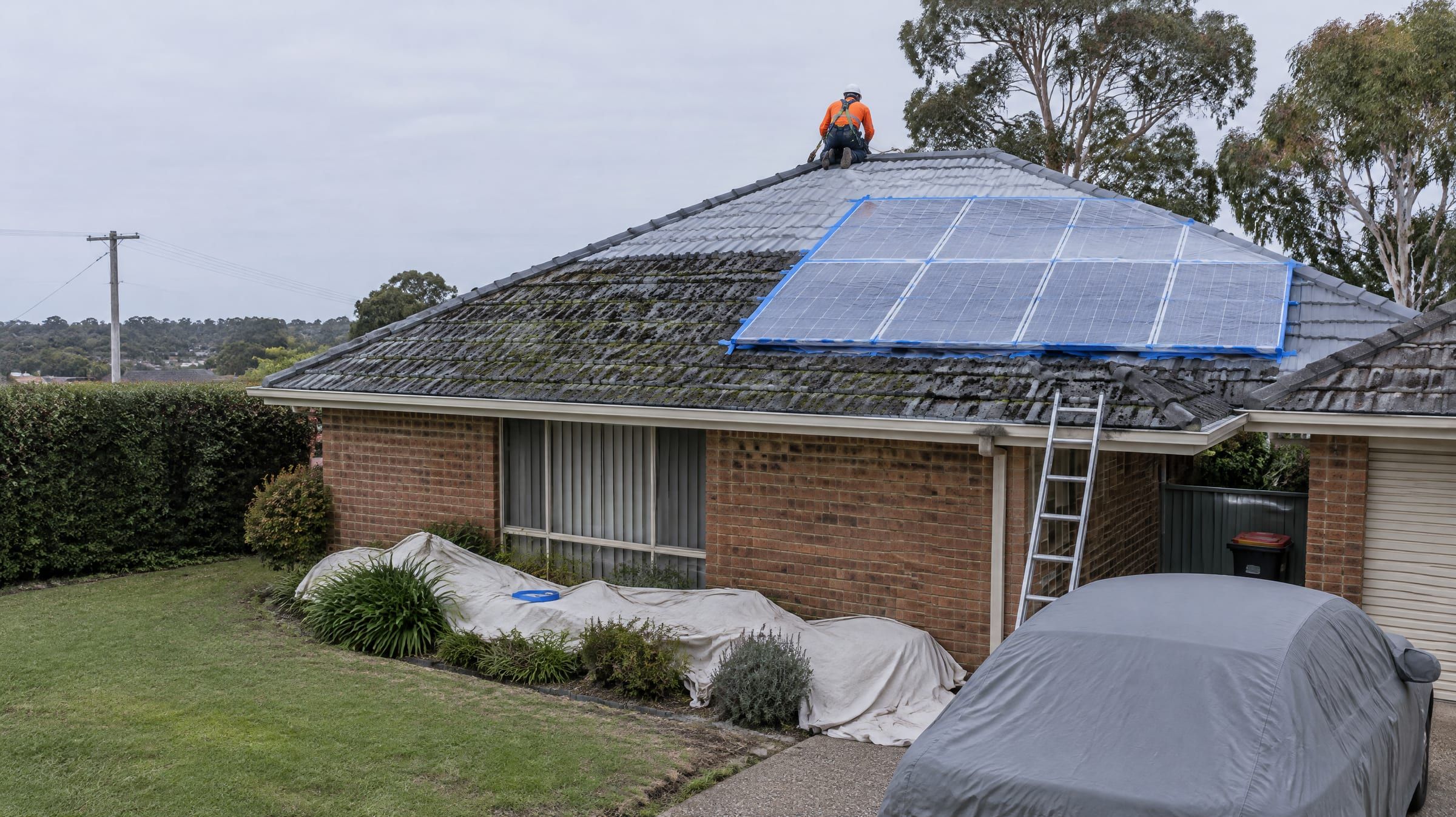
What a roof restoration actually is
A roof restoration is a sequence, not a coat of paint. The roof is inspected, repaired, cleaned as preparation, dried, primed and then coated with a compatible system. The order matters. A coating laid over a cracked tile or a failed ridge line hides the problem for a season and leaves the leak exactly where it was.
That is the principle the work is built on: fix the roof first, finish it second.
Restore, repair or replace: deciding before quoting
Every roof we look at gets the same first question. What condition is it actually in?
- Repair only suits a sound roof with an isolated problem: a few slipped or broken tiles, a short run of failed pointing, a lifted flashing.
- Restoration suits a roof whose tiles or sheets are structurally sound but whose pointing, bedding or coating has failed across the roof.
- Replacement is the honest answer when tiles are failing across the roof, the frame or battens are compromised, or the roof contains asbestos.
You will see the reasoning in the photographs and the scope, not just a number. If three quotes have given you three different answers, our guide to reading your roof’s condition before you get a quote walks through the same decision.
What we diagnose first
Before any recommendation, we inspect the accessible areas of the roof and photograph them. On a tile roof that means:
- Tiles - cracked, broken, slipped or porous tiles, and why a tile has moved
- Bedding - the mortar bed that holds the ridge and hip caps in place
- Pointing - the flexible compound over the bedding that seals the joint and allows for movement
- Valleys, flashings and penetrations - where most leaks start
- Growth and moisture - moss and lichen hold moisture against the tile surface
On a metal roof the list changes to fixings, corrosion, laps, flashings and sealant at penetrations.
The restoration sequence
- Repairs. Broken tiles are replaced where required and suitable replacements are available. Cracked bedding is rebedded, then flexible pointing is applied over it. Repointing over cracked bedding seals a cap that is no longer held, so we do not do it.
- Preparation. The roof is cleaned as preparation for coating, not as a standalone service. Growth is removed so the coating bonds to the tile, not to what is living on it.
- Dryness hold point. The surface must be dry before primer goes on. We record the check.
- Masking and the weather call. Solar panels, skylights, windows, cars, paving, gardens and the neighbours’ surfaces are masked and protected. Wind and weather decide whether spraying happens that day.
- Primer and coating. A compatible primer or sealer, then the topcoat. The quote names the actual system.
- QA and sign-off. The finished roof is checked, photographed and signed off.
We protect before we spray
Overspray is the risk most restoration quotes do not mention. It lands on solar panels, cars, pools, rendered walls and the house next door.
Our rule is simple. If overspray cannot be adequately controlled, we do not spray. Wind, weather and neighbouring exposures decide the go or no-go on the day, and if the answer is no we tell you why and reschedule.
What your quote will name
A restoration quote should let you see exactly what you are paying for. Ours states:
- What is included, and what is excluded
- The assumptions made about the roof, and what happens if a concealed condition is found
- The repair work, by location and quantity where it can be measured
- The primer and coating system, by name
- How the roof will be accessed and how the site will be protected
- What we need from you before work starts
- The completion documentation you receive
If something concealed turns up once work begins, we stop, photograph it and send a written variation. Nothing proceeds without your approval.
Evidence, not assurances
Every restoration closes with a completion report: the condition found, the pathway chosen, the system installed, the hold-point records, before, during and after photographs, the QA sign-off and the maintenance pathway from here. You keep the record.
Tile and metal roofs we restore
- Concrete tile roofs - the most common roof on the Central Coast and in Lake Macquarie and Newcastle, and the roof most often restored
- Terracotta tile roofs - restoration focuses on repairs, rebedding and repointing; glazed terracotta is generally not coated
- Metal and COLORBOND® roofs - fixings, rust treatment, flashings and coating where the sheet is still sound
How long a restoration lasts depends on the roof’s condition, the preparation and the system, and on coastal exposure. Our guide on what determines how long a roof restoration lasts sets out the factors to compare between quotes.
The SOAKD Pathway
How this job runs, start to finish
- 01 Diagnose
- 02 Decide
- 03 Deliver
- 04 Defend
- 05 Document
Read before you get quotes