
The short answer
There are three options. Mask the panels and coat around them, which often suits older systems. Have a licensed electrician remove the array and reinstall it after the coating cures, which suits newer systems and roofs needing repairs under the panels. Or restore the roof first if solar is still being planned. Condition decides.
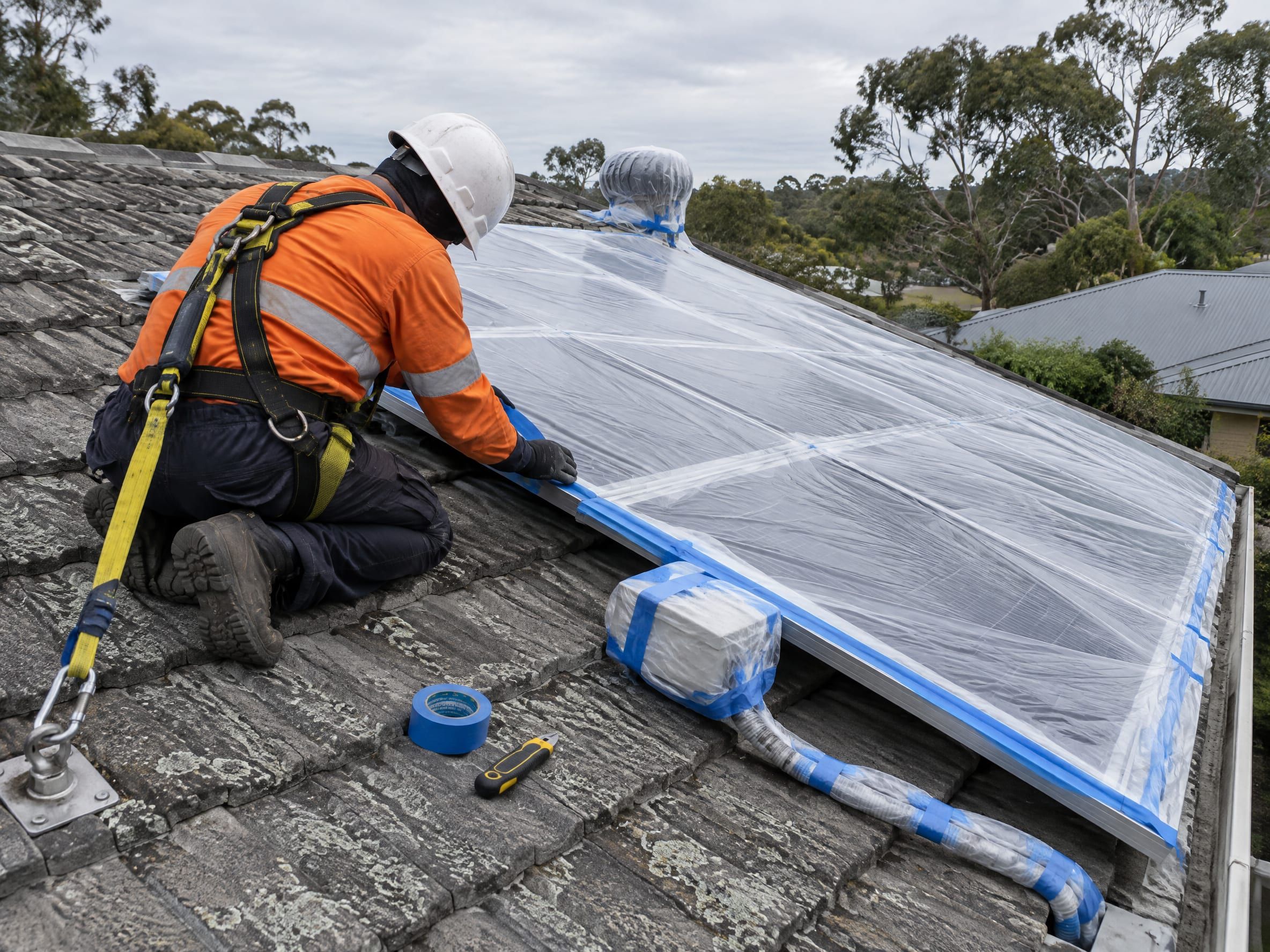
There are three ways to restore or paint a roof that has solar panels on it. The panels can be masked in place and the roof coated around them. The array can be removed by a licensed electrician and reinstalled after the coating has cured. Or, if solar is still being planned, the roof can be restored first. The age and condition of the system, the roof under it and how much of the roof it covers decide which one is right.
What goes wrong when a roof with solar is restored?
Most of the problems are preventable, and they are documented. In October 2024 SolarQuotes, an Australian solar publisher, ran an article titled “Paint Jobs Gone Wrong: How Roof Restorers Can Ruin Your Solar”. It is written against roofers, and it is a fair list to hold any restorer to, including us.
The failure modes it documents include:
- Overspray. Drop sheets that were not secured let paint blow into gaps, and on one job the plastic ran out and paint landed on the lower panels.
- Cleaning damage. Harsh chemicals or abrasive methods can damage the textured glass surface of a panel.
- Water forced into panels. Pressure washing can drive water under the frame and past the edge seals. The article says corrosion and earth leakage faults can follow and destroy the panels.
- Roofers reinstalling panels. It shows unqualified reinstallation, including a clamp in the wrong place and a bolt head close to breaking the glass.
- Seized fixings. Stainless steel and aluminium fixings can corrode together, especially near the coast, which makes removal very difficult.
- Obsolete parts. Mounting hardware from discontinued brands may have no replacement parts, so a frame can be written off.
- Hidden damage. Plugs and wiring can be damaged during removal, and cracks in the backing sheet of a panel may not be visible.
- Rooftop isolators. Pre-2016 plastic isolator housings are described as fire-prone, and painting over them or hiding their labels is called out as poor practice.
- Partial coverage. Coating only the visible part of a roof, or leaving gaps where arrays meet.
Its advice is clear. Covering the panels properly is the minimum standard. Removal is reasonable for newer, well-installed systems. Older systems may be better covered and left in place, because removal can destroy them. And reinstallation, testing and certification belong to a qualified electrician, not a roofer.
We agree with all of it. The rest of this guide sets out how the decision between the options gets made.
Which option suits which roof?
The starting point is the condition of two things, the roof and the solar system, and how they affect each other.
| Situation | Usual pathway |
|---|---|
| Older system, sound roof under the panels | Mask in place and coat around the array |
| Older system, repairs needed under the panels | Weigh the risk of removal against the repairs, with your solar installer’s input |
| Newer, well-installed system, roof needs full coating or ridge work | Removal and reinstallation by a licensed electrician |
| Solar planned but not yet installed | Restore the roof first |
| Roof closer to replacement than restoration | Settle the roof decision before anything else |
These are starting points, not rules. The inspection photographs the roof around and, where it can be seen, under the array, and the scope states which pathway the condition supports and why.
Option 1. Cover the panels in place
Masking in place suits many older systems, where removing the array risks damaging panels, wiring or fixings that may have no replacements. It also suits arrays on a section of roof that can be worked around without disturbing them.
The trade-off is the roof under the panels. Tiles or sheets beneath an array that stays put cannot be fully inspected, repaired or coated. If the roof under the panels is sound, that may not matter much. If the inspection finds broken tiles under the array, failed pointing on a hip line the panels crowd, or corrosion around the mounts, it matters a great deal. Pointing is the flexible compound that seals the ridge and hip caps over their mortar bed, and a failure hidden by panels can let water in where nobody can see it.
Where panels stay in place, our approach is:
- Panels, frames, isolators, conduit, cabling and fixings are masked, and the masking is secured rather than draped
- Isolator labels are never coated or hidden
- Water is not directed at the panels or their edges during roof preparation
- The weather and wind check decides whether spraying happens that day
Roof cleaning before coating is a preparation step inside the restoration, done around the array with the panels protected.
Option 2. Remove and reinstall by a licensed electrician
Removal suits newer, well-installed systems and roofs that need repairs or full coating under the array. It also suits a restoration that includes replacing tiles under the array, or rebedding and repointing ridge and hip lines the panels sit over or crowd. Bedding is the mortar that holds the ridge and hip caps in place, and that work cannot be done properly with panels in the way.
Removing and reinstalling a solar system is electrical work. It is done by a licensed electrician, not by us. The NSW Government’s homeowner guide to solar panels says the wiring of a solar installation must be done by someone holding an electrical contractor licence or an electrical qualified supervisor certificate, or working under the supervision of someone who holds one. It also says the installing electrician must check the system is safe and give you a Certificate of Compliance for Electrical Work. Ask for that certificate after reinstallation as well.
Settle these points before the panels come down:
- Who is engaged to remove and reinstall the system, and who is responsible for testing and certification
- Where the panels are stored while they are off the roof, and how they are protected
- The condition of the fixings. On coastal roofs especially, seized or corroded fixings may need replacing, and a discontinued mounting system may need a new frame
- The timing. The panels go back on after the coating has cured, so the system is not generating in between
- The existing condition. A photographed record of the array before it comes down protects everyone if a fault is found later
Our scope records the sequence and who is responsible for each stage. Electrical or solar conflicts found during the work are documented and managed through the licensed trade before we continue.
Option 3. Restore first if solar is still being planned
If solar is on your list but not yet on the roof, restore the roof first. SolarQuotes makes the same point, that restorations go most smoothly with no solar on the roof at all.
An array is meant to stay put for a long time, and the roof under it should be in a condition to match. A roof that will need repairs or recoating in the next few years is far simpler to deal with now than after panels go on top of it. If the roof is closer to replacement than restoration, that decision should come before solar too. Our guide to restoring, repairing or replacing a roof explains how the condition is read.
What about my solar panel warranty?
We cannot tell you how a restoration affects your panel, inverter or installation warranty. Terms vary between manufacturers and installers, and only they can answer it for your system.
Before work starts, ask your panel installer or the manufacturer, in writing:
- Whether removal and reinstallation by an electrician other than the original installer affects any warranty
- Whether masking and coating around panels left in place has any conditions attached
- What they would want documented, such as photographs before and after
Keep their answer with your restoration paperwork.
Coastal fixings, isolators and other catches
A few issues come up more often on roofs close to the water across the Central Coast, Lake Macquarie and Newcastle.
- Corroded fixings. Salt air speeds up corrosion where different metals meet. Fixings that look fine from the ground can be seized solid.
- Older isolators. SolarQuotes flags pre-2016 rooftop isolators as fire-prone. Whether yours needs attention is a question for your solar installer or electrician. The restoration should never paint over an isolator or hide its labels.
- Growth under panels. Shaded tiles under an array often carry more moss and lichen than the rest of the roof, which matters if the panels stay in place and that section cannot be prepared and coated.
- Access. Access paths are planned around the array so that panels are never walked on or used as a support.
How long a coating lasts afterwards depends on the roof, the preparation and the exposure. Our guide to what determines how long a roof restoration lasts sets out those factors and how to compare them between quotes.
How we protect panels before we spray
Overspray onto panels is the most visible failure in the SolarQuotes list, and it is controllable. Panels, fixtures and neighbouring exposures are masked before any coating goes on. The wind and weather decide the go or no-go on the day, and an overspray check is one of our hold points, a recorded check that must pass before the work continues.
Our rule does not bend. If overspray cannot be adequately controlled, we do not spray. If the answer on the day is no, we tell you why and reschedule.
Every stage is photographed, including the masking around the array, and the completion report records it.
Questions to ask the roofer and the solar installer
Ask the roofer:
- Will the panels be masked in place or removed, and why?
- Who removes and reinstalls them, and who certifies the electrical work?
- How will the panels, isolators and cabling be protected during preparation and coating?
- What wind and weather conditions stop spraying, and what happens to the schedule if they do?
- Will the masking and the panels be photographed before and after?
Ask the solar installer or manufacturer:
- Does removal, reinstallation or coating around the panels affect any warranty?
- Are replacement parts available for the mounting system if fixings are seized?
- Should anything on the system be checked while it is off the roof?
Get the roof assessed
The right option depends on the roof under the panels and the system on top of it. We inspect the accessible areas of the roof, photograph the array and its surrounds, and explain which pathway suits before any price is discussed. The inspection is free, across the Central Coast, Lake Macquarie, Newcastle and Sydney.
Request an inspection, or read about our roof painting and recoating and roof restoration services.
Sources
- Paint Jobs Gone Wrong: How Roof Restorers Can Ruin Your Solar - SolarQuotes
- Home owners' guide to solar panels - NSW Government
Figures quoted from third-party sources are theirs, as published at the time of writing. They are general information, not a quote or a statement about SOAKD Roof & Concrete's work.