
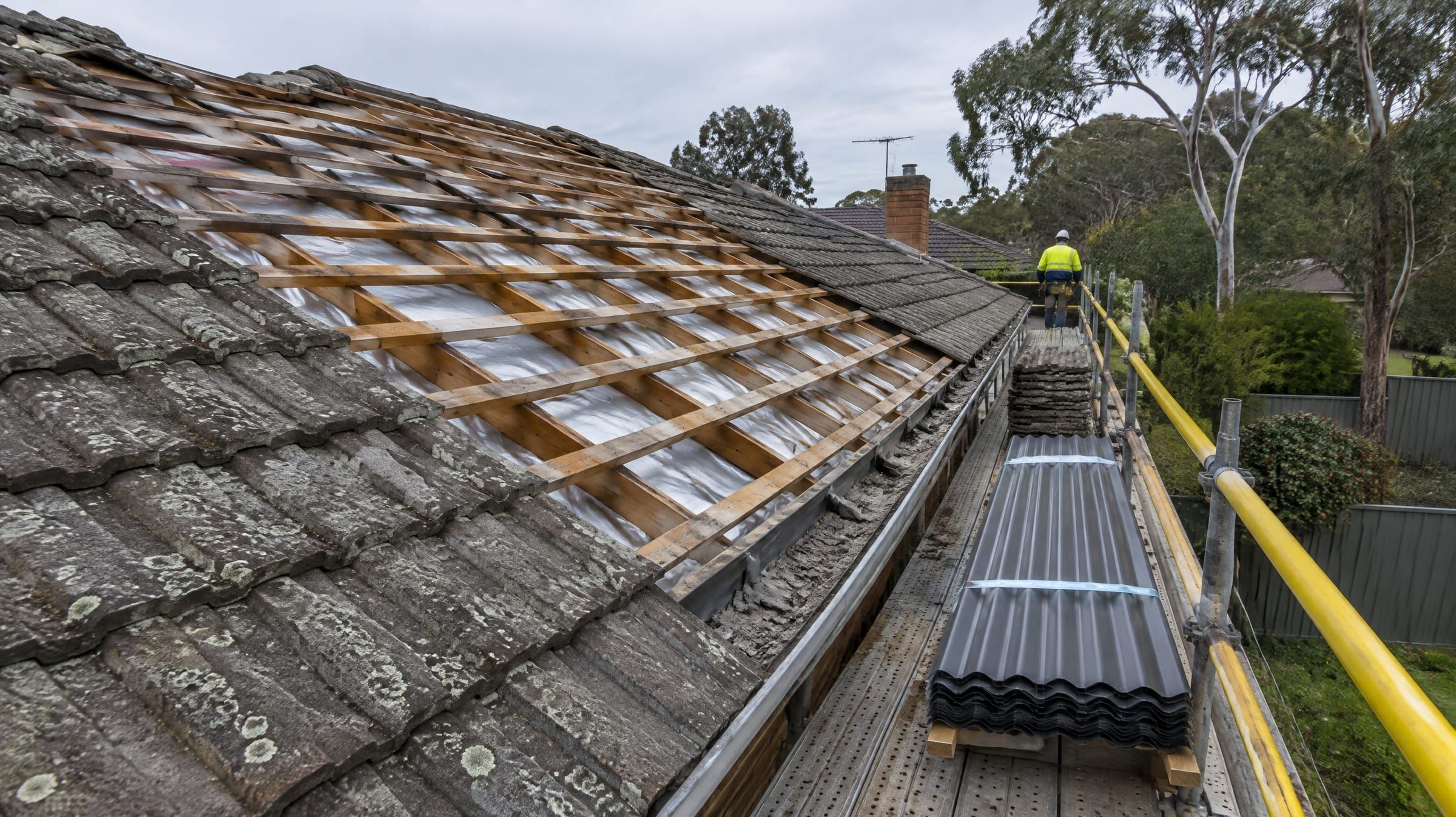
When roof replacement is the honest answer
Replace the roof when its covering has reached the end of its life, not when a run of repairs or a new coating would do the job. The usual reasons are:
- Tiles cracking, crumbling or breaking across the roof, not in one area
- Metal sheets rusted through in many places
- A roof line that sags, which points to failed battens or framing
- Leaks that keep returning after repairs
- A roof that contains asbestos cement sheeting
- A planned change of roof material, such as tile to metal
Replacement is the largest roof job, and it should never be sold before the roof has been diagnosed. If the tiles are sound and only the pointing or coating has failed, a roof restoration is usually the right pathway. If the problem sits in one area, a roof repair may be all the roof needs. We will tell you either way. Our guide on how to tell whether a roof should be repaired, restored or replaced sets out the signs.
What we inspect before recommending a new roof
A recommendation to replace needs evidence behind it. We inspect the accessible areas of the roof and, where it can be reached safely, the roof space underneath, and we photograph:
- The condition of the tiles or sheets on every face of the roof, not a sample
- Ridge lines and roof lines, for sagging or movement
- Battens, framing and sarking where they can be seen
- Flashings, valleys, gutters and penetrations
- Solar panels, antennas, cabling and anything else fixed to the roof
- Any material that may contain asbestos
Diagnosis and quoting are led by Daniel, the founder of SOAKD and director, who has more than 20 years in high-risk construction and industrial environments.
The strip-off and the structure hold point
Part of a roof’s condition cannot be seen until the old covering is off. That is why every replacement has a structure hold point. Once the roof is stripped, work stops while the structure is checked.
At that point we check and photograph:
- Battens, the timber or steel strips the tiles or sheets are fixed to, for rot, splitting, corrosion and spacing
- The frame, the rafters or trusses that carry the roof, for damage, sagging or past alterations
- Sarking, the membrane laid under the roof covering to manage water and dust, for tears, gaps or deterioration where it exists
If the structure is sound, the new roof goes on. If it is not, the defect is documented and managed through the licensed trade, engineering advice or a written variation before work continues. Nothing proceeds without your approval.
Asbestos on the roof
Some older roofs, eaves and sheds contain asbestos cement sheeting. If the inspection or the strip-off identifies material that may contain asbestos, work in that area stops.
We do not remove asbestos ourselves. It is assessed and managed through an appropriately licensed asbestos professional before any roof work in that area continues. Where we know about it at inspection, the quote states how it will be handled and by whom. Where it is found later, you receive a written variation.
Solar panels and electrical conflicts
Solar panels have to come off before a roof can be stripped. Removal and reinstatement are carried out by a licensed electrician, and the quote states who is responsible for each step.
Strip-off also exposes cabling, conduit, isolators and other electrical items in the roof. Where the new roof conflicts with them, or something is found that needs attention, it is documented and referred to a licensed electrician before the new roof covers it. Our guide on roofs with solar panels covers the questions to ask both trades.
Metal roof replacement and tile to metal
If you are looking for metal roofers, the job is usually one of two things. A worn metal roof re-sheeted, or a tile roof replaced with metal. Both are replacements, and both are planned from the battens up.
Changing from tile to metal is more than swapping one covering for another. A metal roof is lighter than tile, and the battens usually change to suit the sheet. The sarking or insulation under the new roof is specified. Ridges, flashings and valleys change with the roof, and gutters are included where they are tied into the old roof or will not suit the new one. Close to the coast, the sheet and its fixings also need to suit the salt exposure of the site.
COLORBOND® and other pre-painted steel come in a range of profiles and colours. The quote names the profile, the colour and the fixings. See BlueScope’s 22 core roofing colours, and the Matt finishes, on our COLORBOND® roof colour chart.
A change of roof material or colour can need approval in some areas. We will tell you if your project may need approvals. Check with your council.
What affects roof replacement cost
The cost of a roof replacement is set by what comes off, what goes on and what is found in between. Size, pitch, height and access matter. So do the materials, the condition of the battens, any asbestos, any solar, and whether gutters and flashings change.
The part no one can price exactly at inspection is the structure under the covering. A quote that skips over it is not a lower quote, only a less complete one. Ours states its assumptions about the structure and what happens at the hold point if they prove wrong.
What your replacement quote will name
A replacement quote should let you compare two quotes line by line. Ours states:
- What is removed, and how it is disposed of
- The new roof material, profile, colour and fixings
- Battens, sarking and insulation, and whether each is new or retained
- Ridges, flashings, valleys and gutters, and whether each is included
- The assumptions made about the structure, and what happens at the strip-off hold point if they prove wrong
- How solar, asbestos and electrical items are handled, and by whom
- How the house is protected while the roof is open
- What is excluded
- The completion documentation you receive
If strip-off reveals something the quote did not allow for, we stop, photograph it and send a written variation with the reason, the work and the price. Nothing proceeds until you approve it.
Evidence, not assurances
At completion you receive a report. It records the condition found, the reason replacement was the pathway, the hold-point records including the structure check, the materials installed, before, during and after photographs and the QA sign-off. It is the record of what sits under your new roof, which no one will see again until the next one.
Every replacement follows the SOAKD Pathway. The inspection is free. Request an inspection or call 0468 029 068.
The SOAKD Pathway
How this job runs, start to finish
- 01 Diagnose
- 02 Decide
- 03 Deliver
- 04 Defend
- 05 Document